

I'm a Dietitian Mom, and Yes, I Take Some of My Kids' Halloween Candy Away
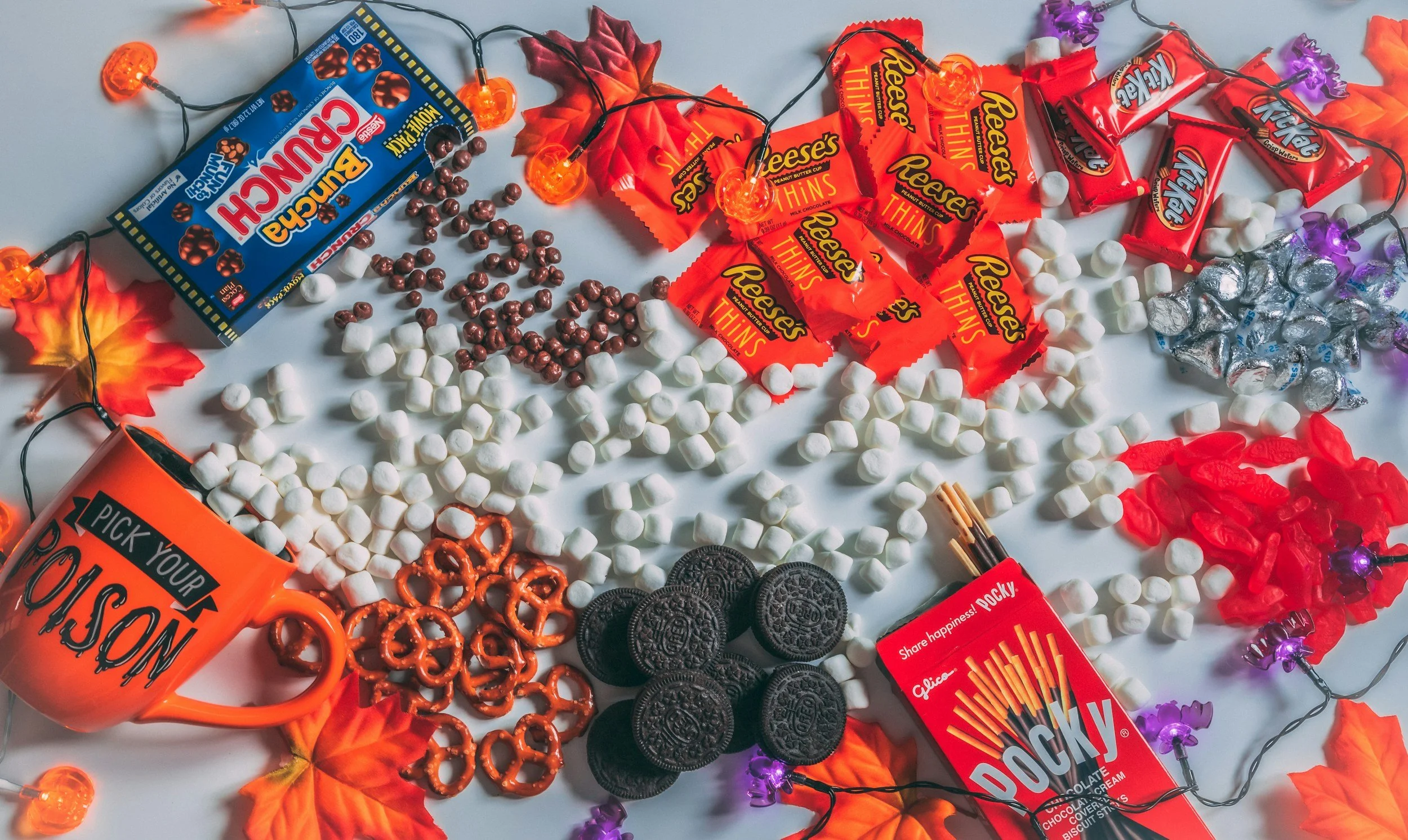
Every October, I start seeing all the advice about Halloween candy.
How much is too much? Should you limit it? Should you let your kids eat as much as they want? Is there a healthier candy you should be buying instead?
And as a registered dietitian and a mom of three, I have some thoughts about this.
Because here's the thing. Every Halloween, my kids come home with what feels like an actual garbage bag full of candy. 😂
I'm not exaggerating.
And yes, even as a dietitian who talks about building a healthy relationship with food, I've found myself needing to take some of that candy away.
I've tried different approaches over the years, and I've learned something important.
Having a healthy relationship with food doesn't mean you can't have boundaries.
And I think that's a conversation we need to have more often.
1. Candy Doesn't Need to Be the Enemy
First, let's get something straight.
Candy is candy. Nobody is pretending it provides the same nutritional benefits as fruits, vegetables, or a balanced meal.
But does that mean eating candy is bad? No.
One thing I'm really intentional about, both as a mom and a dietitian, is the language we use around food.
When kids constantly hear that sugar is bad, candy is unhealthy, or they need to earn their treats, those messages can shape how they think about eating.
Instead, I like to talk about how different foods serve different purposes.
Some foods give our bodies nutrients that help us grow, feel energized, and stay healthy.
Other foods might be something we simply enjoy because they taste good.
And guess what? There's room for both.
2. Yes, I Set Boundaries Around Halloween Candy
Now, let me be honest with you.
With three kids bringing home enormous amounts of candy, if I left all of it out, they would happily ask for it all day, every day.
And after trying different approaches, I've realized that keeping every single piece of Halloween candy in our house for months just doesn't work for our family.
So here's what I do.
I let my kids enjoy Halloween. We talk about their favorite candies, and I don't want them feeling guilty about eating them.
But eventually, we go through the candy, keep the pieces they really enjoy, and decide together what to do with the rest.
Sometimes that means putting extra candy away or getting rid of candy we don't need.
And I'm okay with that.
I'm not telling my kids they can't be trusted around sugar or that candy is bad for them.
I'm simply creating reasonable boundaries around how much we're keeping and when we're enjoying it.
There's a difference between restricting food out of fear and setting realistic boundaries as a parent.
And I think sometimes we forget that.
3. Don't Make Kids Earn Their Candy
Have you ever told your kids they need to finish their vegetables before they can have dessert?
I get it. We all want our kids to eat nutritious foods.
But when dessert becomes the reward for finishing vegetables, we may unintentionally make those vegetables seem like the chore and the dessert seem like the prize.
Instead, I encourage parents to keep offering balanced meals without making treats something children have to earn.
You can have expectations around mealtimes without turning eating into a negotiation.
And no, your child doesn't have to finish everything on their plate to deserve a piece of chocolate.
4. Don't Forget About Actual Meals
Here's something that often gets overlooked on Halloween.
Kids are excited, they're running around, and the last thing they're thinking about is sitting down for dinner.
But sending an overly hungry child trick-or-treating and then expecting them to have no interest in eating candy isn't particularly realistic.
I recommend offering a satisfying meal or snack before heading out.
It doesn't need to be fancy.
Pizza, chicken and rice, sandwiches, pasta, or whatever works for your family.
The point isn't to fill them up so they won't eat candy.
It's to make sure they're getting the nourishment they need while still being able to enjoy Halloween.
And if the evening gets chaotic and dinner doesn't go exactly as planned?
It's okay.
One imperfect meal isn't going to ruin your child's nutrition.
5. Let Halloween Be Fun
I think sometimes, as parents, we get so caught up in making the "right" nutrition decisions that we forget about the bigger picture.
Halloween is about dressing up, walking around the neighborhood, being with friends, and getting excited over your favorite candy.
Those memories matter, too.
If your child eats more candy than usual one evening, you don't need to turn it into a lecture.
And if they end up with a stomachache, you can help them notice how their body feels without making them feel ashamed.
Of course, we still need to follow basic safety precautions, especially with food allergies and choking hazards for younger children.
But beyond that, it's okay to let Halloween be Halloween.
What I Really Want Parents to Remember
As a dietitian, I work with adults who have spent years struggling with food rules, guilt, restriction, and feeling like they've failed every time they eat something they enjoy.
And while those struggles are complex, I believe the conversations we have around food at home matter.
That's why I don't want my kids growing up thinking they need to fear candy.
But I also don't believe that raising kids with a healthy relationship with food means never setting limits.
We can offer structure, create boundaries, encourage balance, and still allow our children to enjoy food.
Those things can exist together.
Because raising healthy kids isn't just about what they're eating. It's also about the relationship they're developing with food.
And that's something I care about long after Halloween is over.
More Real-Life Nutrition Advice
If you're looking for more realistic ways to feed your family without the stress, check out my article
And if you enjoy these conversations about nutrition, food freedom, and real life, I'd love to have you join my email list.
At Wellness From Within, our registered dietitians also provide individualized virtual nutrition counseling. Many insurance plans cover nutrition visits, depending on your benefits.
